

What To Use To Clean Oxidized Aluminum
Anodizing is a method for changing the surface chemistry of metals and other substrates. It protects confronting corrosion, enhances aesthetic qualities, resists scratching and is one of the most durable surface finishes available. Anodizing tin be done on a range of materials, only today let'south await at aluminum. These 8 questions will help to show why anodizing is a clever surface treatment that'south both practical and beautiful.
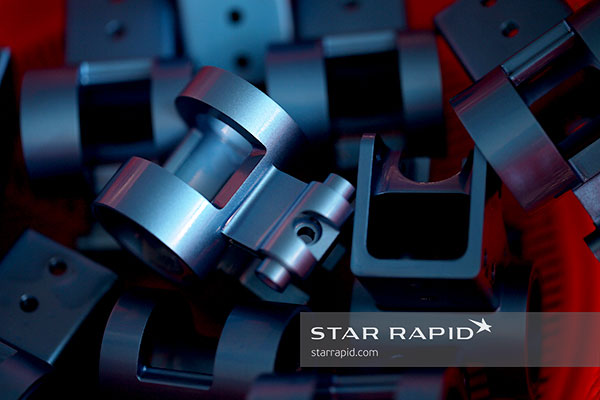
Anodizing is one of the nearly durable surface treatments
1. How is Aluminum Anodized?
To prepare aluminum for anodizing, the surface is outset thoroughly cleaned and rinsed, and then placed into a bath of some electrolytic solution similar sulfuric acid. An electrolyte is an electrically conductive solution with lots of positive and negative ions that information technology wants to bandy.
A positive electric accuse is applied to the aluminum, making it the "anode", while a negative charge is applied to plates suspended in the electrolyte. The electric electric current in this circuit causes positive ions to be attracted to the negative plates, and negative ions to flock to the positive anode, the piece of aluminum.
2. What is a Barrier Layer in Anodizing?
The electrochemical reaction causes pores to course on the surface of the aluminum as excess positive ions escape. These pores form a geometrically regular pattern and brainstorm to erode downwardly into the substrate. The aluminum at the surface combines with the negatively charged O2 ions to create aluminum oxide. This is called a barrier layer, a defense against further chemic reactions at those spots.
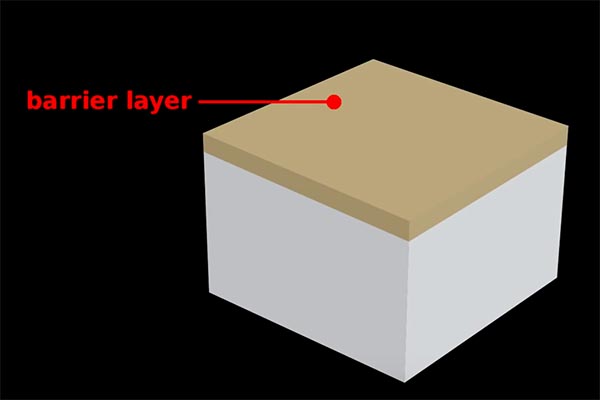
The barrier layer protects confronting further oxidation at the surface
Every bit electric current continues to exist practical, the relatively weak and reactive areas of the pores will keep to penetrate deeper into the substrate, forming a serial of column-like hollow structures.
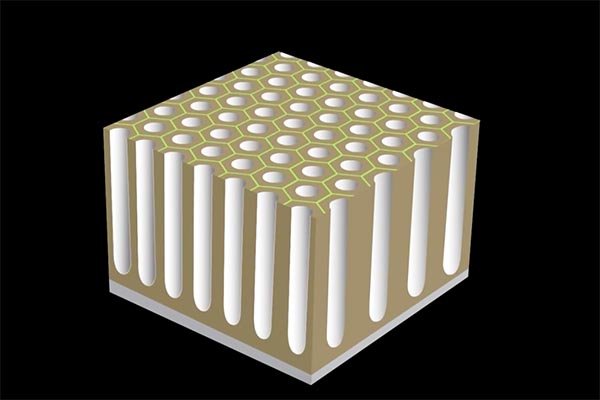
A regular pattern of surface porosity is created when electric electric current is applied.
The longer the current is practical the greater the penetration of these columns. For typical non-hard coatings, the depth can be up to ten microns. In one case this level is reached, and if no colour is needed, the process is stopped and the surface tin exist sealed simply by rinsing in water. That will leave you with a hard, natural aluminum oxide coating, able to withstand chemical attack and very scratch resistant. Aluminum oxide is rated nine out of 10 on the Mohs hardness scale, meaning second only to diamond.
3. What is Hard Anodizing?
Hard anodizing, sometimes called Type III, offers greater corrosion protection and resistance to wear in extreme environments or with moving mechanical parts subject area to a lot of friction. This is produced by continuing the electric current until the depth of the pores exceeds ten microns, all the fashion to 25 microns or even more than. This takes more time and is more expensive only produces a superior result.
4. Does Aluminum Need Corrosion Protection?
Although aluminum doesn't rust, it tin can deteriorate in the presence of oxygen, which is chosen oxidation. What is oxidation? It simply ways to react with oxygen. And oxygen is very reactive, readily forming compounds with most other elements. When aluminum is exposed to the atmosphere it apace forms a layer of aluminum oxide on the surface, and this layer provides a degree of protection against further corrosion.
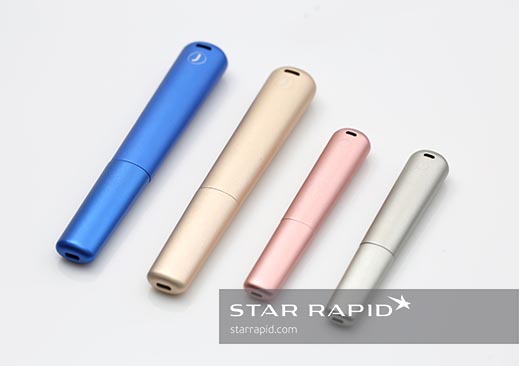
Anodizing is functional and beautiful
But aluminum must withstand more than but pure air and water. Acrid rain, salt water and other contaminants can still exploit weaknesses in the surface passivation. Even modern alloys volition vary in response to this ecology exposure, ranging from mere surface discoloration all the way to mechanical failure.
5. How is Colour Added to Metal Anodizing?
Colored aluminum is what most of us moving picture when nosotros think of anodizing. That's the real genius of this process. The dainty, stable pores etched into the surface are ideal for introducing tints or pigments.
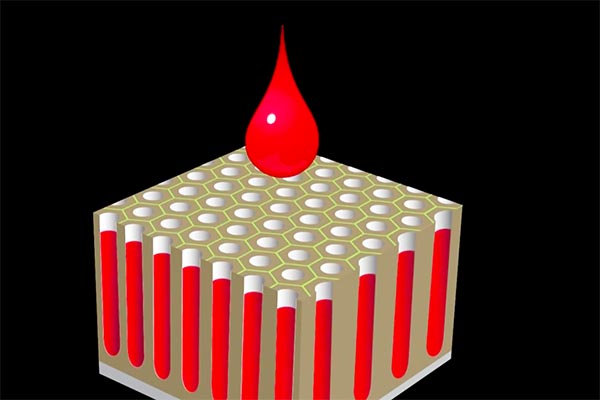
Empty pores are ideal for calculation colorants.
The pigment fills all the empty pores up to the surface, where it'due south so permanently sealed off. That's why anodized colors are so durable – they can't be scratched off from the surface considering in fact the colors are deep down and tin can only be removed by grinding away the substrate.
6. Why Does Anodized Aluminum Ever Take That Feature Metal Sheen?
After coloring, anodized aluminum has a characteristic "metallic" await. This is caused by two factors. I, because of the compatible electro-chemical etching, a rough surface is left behind. The deeper the pores, the rougher the surface volition be but the colors will as well be that much more durable.
Secondly, calorie-free striking the surface partly interacts with the colorant and partly with the uncolored metal at the acme.
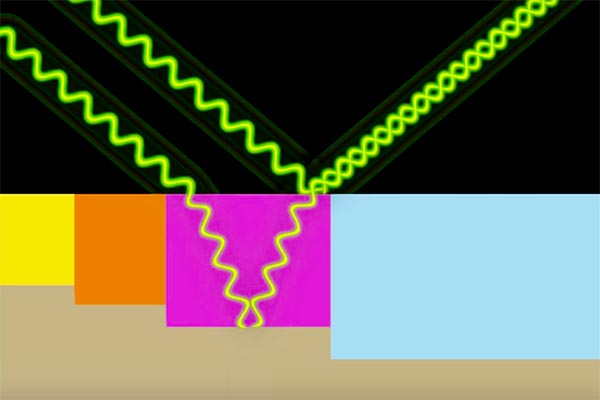
Light changes colors as it reflects from an anodized surface.
So the light that bounces back to strike your eye will in fact exist a combination of two distinct wavelengths interacting every bit they reflect from slightly different surfaces. This causes the distinctive shine of aluminum anodizing.
7. Can Materials Other Than Aluminum Be Anodized?
Yeah. Anodizing also works with magnesium, titanium and even conductive plastics. Information technology's inexpensive, reliable and eminently durable. That's why information technology's so unremarkably used in architectural fittings, because it'due south both beautiful and almost impervious to the effects of weathering.
eight. Why is it Impossible to Anodize an Entire Part?
Anodizing requires that a part is immersed in a serial of chemical baths. Holding a role in position requires that information technology exist mounted on a hanger of some kind to keep it from falling to the lesser of the tank. Wherever the holding fixture touches the office, that area will be blocked and the anodizing chemicals won't work properly. That's why it'south smart to design a place on your part which can be used for belongings only which won't be adversely afflicted cosmetically.
Is Anodizing Right For You?
When you contact us for a free quotation and projection review, we'll be able to offering advice on the many unlike finishing services that we offer for rapid protoypes and low-volume manufacturing. Our specialists will assist you lot to notice the solution that fits your budget, time to market and desired results. Allow's get started today!
*Star Rapid is grateful to Engineerguy for the use of some illustrations nether Artistic Eatables License Share Alike License iii.0.

Source: https://www.starrapid.com/blog/7-things-you-need-to-know-about-anodizing-aluminum/
Posted by: smithsamphy.blogspot.com
0 Response to "What To Use To Clean Oxidized Aluminum"
Post a Comment