

How To Clear Up A Large Pond
You want a pond on your property, but how do you naturally prevent dense algae blooms and other forms of nutrient pollution? A company in the business of removing pond pollution offers a 3-step guide. But unattended ponds and lakes can suffer from weeds and algae, stagnation, and foul odors. What causes these problems to occur? These are all symptoms of nutrient pollution, a problem that is plaguing our lakes, rivers and ponds throughout North America. As defined by the U.S. Department of National Oceanic and Atmospheric Administration , nutrient pollution is "the process where too many nutrients, mainly nitrogen and phosphorus, are added to bodies of water which can act like fertilizer, causing excessive growth of algae." Where does nutrient pollution come from? Nitrogen and phosphorous come in the form of: There are many pond care options on the market. How do you decide what is best for your property? There are two paths you can go down in addressing these issues: You can treat the algae and weeds with herbicides or algaecides, but these remedies are potentially toxic. In addition, this solution ]treats the symptoms of the problem by killing off the unwanted aquatic vegetation, but with a downside (adding chemicals) that may make your pond worse than it was in the first place as time goes on. More on that later in this article. Use an all-natural program for your pond to treats the main issue causing your pond problems: excess nutrients in the water body. Choosing to go the natural route is safe for humans, animals, fish, crops and the environment. It is also a sustainable approach that will leave your pond with no toxic residue in it once the pond is clean and clear. Over time your pond maintenance costs will go down while your water (and everything in or around it) becomes healthier. Prevent excess nutrients in your pond by treating it with natural bacteria and enzyme blends. These are designed to consume the nutrients in the water that cause pond problems. Bacteria and enzyme products are natural, eco-friendly, safe and easy to use. Using the right blends of bacteria and enzyme is critical. Freshwater suffering from nutrient pollution need bacteria that are hungry to consume phosphates and nitrates. Enzymes, also critical in the natural process of cleaning up ponds, break down organic matter so the bacteria can consume the nutrients. Remember that not all bacteria are designed for dealing with nutrient pollution, so look for proven quality products that have a good track record on the market. Follow the application rates recommended on the labels. Look for a product that: Another best practice for environmentally sound pond management is to aerate the water. Aeration is the process of adding oxygen to water, improving the oxygen vs. dissolved oxygen levels. Aeration provides oxygen that helps: There are two main types of aeration systems: bottom-up aeration and surface aeration. Bottom up aeration systems are designed to aerate water from the bottom of the pond. This is by far the most effective aerating method, and is 8-10 times more efficient than surface aeration! Dissolving oxygen into the water at the bottom of the pond allows the oxygen to more efficiently mix with the water and it provides a filtration system effect. As the oxygen bubbles rise through the water column they pick up organic debris that is suspended in the pond body – thus burning off excess organic debris that causes pond stagnation, algae and weeds. The more time the oxygen has in the water, the more efficient the dissolving process is. Bottom up aeration can help avoid fish kills and support an overall healthier ecosystem in the pond. With fountains or surface aeration, water is sucked up and pumped several feet into the air. This requires at least two times more energy resulting in higher costs of operation and lower equipment life expectancies. The motors for these surface aeration systems are in the water so the seals break down over time and water leaks into the motor casings. In addition, these motors must work much harder, pushing water vs. pushing air the way bottom up aeration systems do. Oxygen that is added to the pond water through surface aeration is derived only from the splashing of the water on the surface of the pond. Essentially, the splashing traps oxygen in the top 6 inches to 1 foot at the surface of the pond water. When using bottom up aeration systems, choose between three main types: electric aeration, windmill aeration, or solar aeration. A low-draw electric aerator might be right for you if: A windmill aeration system may be right for you if: A solar aeration system may be right for you if you: In order for pond treatments and aerators to work effectively, the amount of vegetation entering the pond should be managed. Regularly remove unwanted aquatic vegetation like fallen leaves, weeds and algae manually. As this article mentioned earlier, using herbicides and algaecides to kill off unwanted vegetation may not be the best choice for you. These chemicals only mask the problem and can often make it worse. When algae and weeds are treated with herbicides and algaecides, the dead, decaying organic matter sinks to the bottom of the pond, adding to the pond muck and sludge, increasing its nutrient load and zapping oxygen from the water. The excess nutrients allow new algae and weeds to grow, creating an ineffective cycle e ventually requiring costly dredging to remove sludge build up . To remove unwanted aquatic vegetation manually, look for a good weed cutter or rake. Look for a weed cutter that is lightweight and includes a cutting head and removable floatation device so you can cut weeds and then pull or rake them out of your water for good. The floatation device will help you remove floating aquatic vegetation. You can remove the floater and to sink the weed cutter into the water to access lower weeds. Natural pond care programs work by targeting the root cause of the problem and are a much more sustainable approach to pond care. Over time natural products will transform your pond's ecosystem to be more self-sustaining, lowering your costs in the long run. Natural solutions treat your water without the repercussions of harmful side effects and are safe for the applicator and the environment. By following these three simple steps, and using all natural pond and lake care products, you can both enjoy your pond or lake and maximize the value of your property. Photos courtesy of Koenders Water Solutions.  Ponds and lakes on rural properties serve many purposes. They can be an essential water source for crops, livestock, fish, birds and wildlife. They can also be a great source of fun and recreation for the family during hot summer months. If maintained properly, ponds also can add value to your property. We offered a step-by-step tutorial on adding a pond to your property here.
In recent years, this has become an issue of epidemic proportion, impacting our freshwater sources to a level that scientists are seriously concerned about the future health of our freshwater sources. If nothing is done to reduce these issues in large and small freshwater bodies alike, oxygen levels deplete, fish die off, water stagnates, algae blooms grow more frequently, quality of irrigation water degrades, and the health of animals and livestock deteriorates.
How do you fight back against nutrient pollution in freshwater?
1: Treat weeds and algae blooms with herbicide or algaecide
2: Use natural remedies to stop nutrient pollution
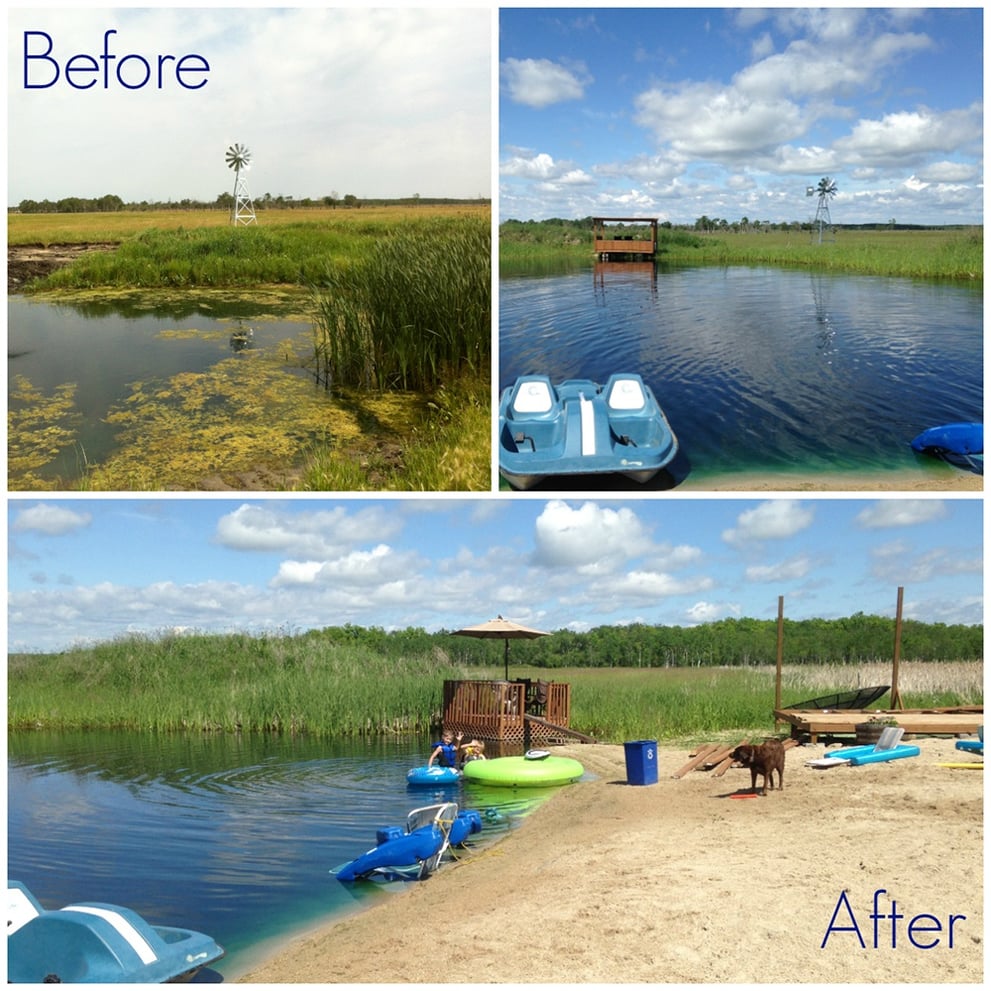 An example of how natural remedies changed the look of one of Koender's client's ponds.
 Here are three easy steps and best practices to achieve natural pond care:
Step 1. Prevent Excess Nutrients with Natural Bacteria and Enzyme Blends
Step 2. Treat the Source of Pond Problems by Adding Aeration
Bottom Up Aeration
Surface Aeration
Types of Bottom UP Aeration Systems
Electric Aerators
Windmills
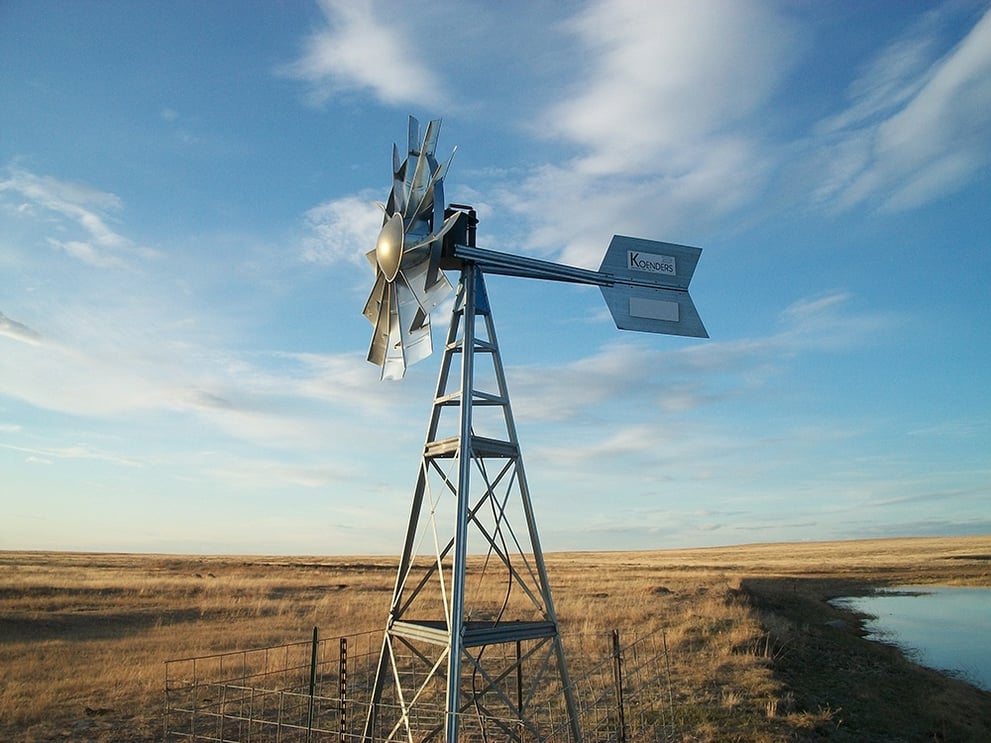 A windmill by the company that wrote this article, Koenders Water Solutions.
 Solar Aerators
Step 3. Maintain, Maintain, Maintain.
Why Natural?

How To Clear Up A Large Pond
Source: https://rethinkrural.raydientplaces.com/blog/how-to-naturally-maintain-ponds-and-lakes-on-your-rural-property
Posted by: smithsamphy.blogspot.com
0 Response to "How To Clear Up A Large Pond"
Post a Comment